



Coat of Arms - Charges R-S
Charges | A | B | C | D - F | G - H | I - N | O - Q | R - S | T - Z |
|
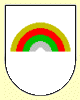
Rainbow |
The rainbow is an ancient heraldic sign of peace, safe travel, and good luck. It also symbolizes good luck after bad. The proper colors of a heraldic rainbow are gold, red, green and silver. |
|
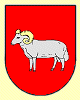
Ram |
The ram is a symbol of authority and leadership. A person who bore such a device on his shield was supposed to possess all of the power and nobility that was attributed to the ram. |
|
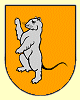
Rat |
Symbolizes one who is cunning and determined. |
|
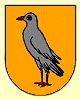
Raven |
As the collector of bright objects, the raven stands as a symbol of knowledge. It is also an emblem of divine providence. This symbol also represents one who has derived little from his ancestors and, thus, has become the architect of his own fortunes. It also represents one of an enduring constancy of nature. |
|
Reeds |
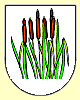
Reeds represent the just, who are said to "dwell on the riverbanks of grace." The reed is also one of the symbols of Christ's passion, as He was offered a sponge soaked in vinegar on the end of a reed. Bulrushes symbolize the multitude of faithful who lead a humble life and abide by Christian teaching. This symbol may also be granted to recall a memorable event that occurred near water where bulrushes were abundant. |
|
Rhinoceros |
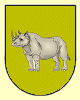
The rhinoceros fights with great ferocity when aroused, but never seeks combat. On a shield, the symbol indicates the same characteristics in its bearer. |
|
Rocks |
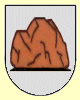
Rocks represent one who provides safety, refuge and protection. See also HILLS. |
|
Rook |
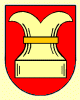
A rook is also called a castle, and may have been granted to those who had captured or defended castles. See also CHESS ROOKS and CASTLE. |
|
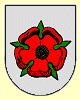
Rose |
The rose is a symbol of hope and joy; it is first among flowers and expresses beauty and grace. With a red blossom, it is a symbol of grace, beauty, and sometimes martyrdom. It is also a sign of the seventh son. |
|
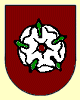
Rose - White |
The white rose expresses love and faith and in Christian symbolism, it signifies purity. |
|
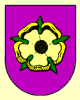
Rose - Yellow |
The yellow rose is a symbol of absolute achievement. |
|
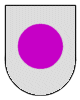
Roundles |
A Roundle is a circular image of a single color placed on the field of the shield. Gold: bezants or byzantine coins - One who has been found worthy of trust and treasure White: plate - generosity Green: pomme - apple Purple: golpe - wounded Blue - hurt or wortleberry Black: pellet, ogress, or cannon ball Torteau - red - communion wafer or manchet cake Tawney - orange - tennis ball See also BEZANT, GOLPE, HURT, ORANGE, PELLET, PLATE, POMME, TORTEAU. |
|
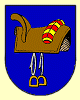
Saddle |
A saddle represents preparedness for active service. See also SPURS and STIRRUPS. |
|
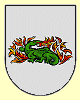
Salamander |
The salamander signified a man of faith, and was also considered a sign of good luck. It usually appears as an ordinary garden amphibian or lizard which had the ability to walk within flames due to the magical milky substance it's skin exuded to make itself impervious to fire. Some legends claim that the salamander was an elemental creature of fire itself. |
|
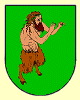
Satyr |
A satyr is composed of a demi-savage, or half of a man with a few inhuman characteristics such as large pointed ears, united with the hind-legs of a goat so that he walks upright on two hooves. Satyrs are believed to represent masculinity and lust. |
|
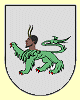
Satyral |
A Satyral has the body of a lion, the face of an old man and the horns of an antelope. It is usually only used as a supporter in a coat of arms. Believed to represent one who is wise, but fierce. |
|
Savage |
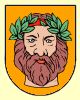
Related to the crusades and taking the head of the enemy. |
|
Sceptre |
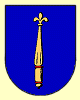
The sceptre (scepter) is a symbol of justice and a chief emblem of royal authority. Frequently it occurs in the hand of a king or a saint. |
|
Scythe |
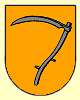
The image of a sickle or a scythe expresses the hope of a fruitful harvest of things desired. See also SICKLE. |
|
Sea Dog |
The sea dog is a symbol of port towns and the sailors that spent their lives upon the sea. It is included in the family of sea chimeras such as the mermaid and the Capricorn. |
|
Seahorse |
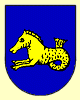
The heraldic sea-horse is an imaginary creature that symbolizes the power of the water. It is an emblem of safe travel, particularly by sea. |
|
Sea Lion |
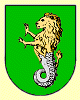
Signifies dauntless courage at sea. |
|
Serpent |
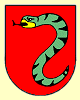
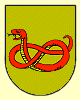
The serpent is an emblem of wisdom and defiance. In Ireland, the serpent is often used as an emblem of St. Patrick. This is derived from the legend of St. Patrick clearing Ireland of snakes. They also considered it a symbol of fertility and renewal. Because of its forked tongue, it was also associated with lightning and the sun. Serpents also represent knowledge. There is nothing to distinguish a serpent or a snake from any of the other names given to it in heraldry such as cobra, adder, or bis. See also PYTHON and SNAKE. |
|
Shacklebolt |
Signifies victory in war. See also FETTERLOCK |
|
Shamrock |
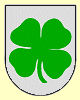
Represents perpetuity and longevity. In Ireland Saint Patrick used the shamrock to explain the holy trinity, thus giving it Christian significance. See also TREFOIL. |
|
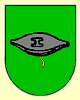
Shell |
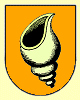
Signifies protection of providence. |
|
Shield |
Signifies a defender. See also ESCUTCHEON OF PRETENSE.. |
|
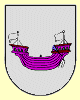
Ship |
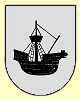
The ship is an emblem of hope, joy, happiness and adventure. It usually signifies a notable quest at sea, by which the first bearer became famous, but in more ancient bearings the emblem may have simply been derived from a long-standing seafaring tradition.See also LYMPHAD and GALLEY. |
|
Ship Demasted |
A ship without a mast represents disaster at sea. |
|
Shuttle |
In heraldry, the shuttle is a symbol of industry and productivity. Sometimes it is called a weaver's shuttle and it is often found in arms with some connection to that trade. |
|
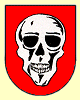
Skull |
Denotes mortality. |
|
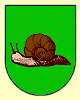
Snail |
Symbolizes deliberation and perseverance. |
|
Snake |
Indicates wisdom. In Ireland the snake was a symbol of fertility and renewal. See also PYTHON and SERPENT. |
|
Spear |
Though the spear, the spearhead and the broken spear are all very similar symbols, they each have a distinct symbolic meaning. The spear, lance or tilting-spear is an emblem of knightly service and devotion to honor and chivalry. The broken spear is a symbol of peace. The spearhead, or javelin, is a deadly device of ancient origin said to represent dexterity and nimbleness of wit, a person able to penetrate and understand matters of the highest consequence. The spear is distinct in that it is always drawn with a sharp point for warfare, instead of blunt, as it would have been for a tournament. See also LANCE. |
|
Spearpoint |
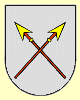
Symbolizes dexterity and nimbleness of wit to penetrate and understand matters of highest consequence. See also PHEON. |
|
Sphere |
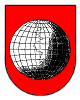
Represents geographical or scientific reference, or one who engages in the study of the sciences. |
|
Sphinx |
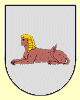
The sphinx, a mythological creature derived from the Egyptian figure is usually drawn with a lion's body, legs and tail and a woman's head and chest. The sphinx may also be shown with wings. It represents omniscience and secrecy. |
|
Spider |
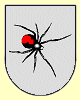
Symbolizes wisdom, labor and providence in all affairs. |
|
Spur - Gold |
A crest or coat of arms with the device of a spur on it was awarded to a knight who had done magnificent deeds. In some instances the spur is winged. Spurs are more often termed 'mullets of five points pierced,' which translates to five pointed stars with a hole in the center, or the part of the spur used to actually cut the horse. This was a dangerous implement, used by knights to stimulate their war-horses into action. It signifies preparedness or readiness for battle, pressing onward. See also MULLET and STAR. |
|
Spur - Silver |
Silver same basic meaning as "spur", but silver represents an esquire. |
|
Squirrel |
The squirrel's habit of storing nuts to ensure a supply of food for the winter makes him a symbol of thrift, caution and conception, also a lover of the woods. |
|
Staff |
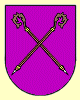
The staff is a common symbol of office or authority. The pastoral crosier is a type of staff that is an emblem of a shepherd's watchfulness over his flock. It symbolizes jurisdiction and authority. Another type is the palmer's staff that is a symbol of the traveler, representing the early pilgrimages to Jerusalem. See also STAVES and CROSSIER. |
|
Stag |
The stag has a variety of symbolic meanings. It can indicate someone who is a lover of peace and harmony. It may also indicate a person who foresees opportunities well. In the latter case it is a symbol used for one who will not fight unless provoked. The stag or hart is also an emblem of purity and fleetness. The stag was associated with healing, for he knew which medicinal plants to take in order to shake off the hunter's arrow. The person bearing this symbol was considered impervious to weapons.
In Ireland the stag was one of the most ancient of charges and was regarded as the most handsome. The stag represents the very ancestors of the Celtic race. See also HART, DEER, BUCK. See HIND for female deer. |
|
Staple |
It is believed that staples were used to symbolize one who was in trade. |
|
Star |
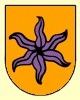
The star symbolizes honor, achievement and hope. It also symbolizes celestial goodness and one who is noble. In some cases, a star may represent a falling star and denote a divine quality bestowed from above, whereby men "shine in virtue like bright stars on the earth." Stars with wavy points are emblems of God's goodness. See also ESTOILE and MULLET. |
|
Star Shot |
Also known as a star stone. Represents a warrior's instrument. |
|
Staves |
Pilgrim's or Palmer's Staves - Represents the shepherd's watchfulness, Christian faith, and pastoral authority. May also refer to early pilgrimages to Jerusalem. See also STAFF and CROSSIER. |
|
Stirrup |
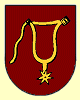
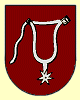
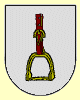
A stirrup represents one who is prepared for active service. See also SADDLE and SPUR. |
|
Stork |
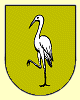
The stork and the heron, also called a herne, are very similar to the crane. Both birds were emblems of filial duty and gratitude or obligation, and like cranes, storks were believed to stand watch for each another. The stork is often shown holding a snake, while the heron often holds an eel. As with the crane, they represent vigilance. See also CRANE. |
|
Sun |
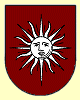
The sun is an emblem of glory, splendor and brilliance. It is also a symbol of authority. It represents happiness, life and spirituality. The rising sun is a symbol of hope. The rays are alternately straight and wavy, which symbolize the heat and light that we derive from them. One ray of the sun signifies "by the light of heaven."
In Ireland the Celts worshiped the sun. Invoking the sun would be the same as invoking truth. |
|
Sunflower |
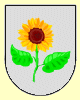
The sunflower signifies that just as the flower turns toward the sun, so the bearer turns to the light and glory, symbolized by the sun. Sometimes referred to as a marigold, it is an ancient heraldic emblem of devotion and piety. |
|
Swallow |
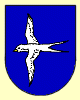
One who is prompt and ready in the dispatch of his business. See also MARTLET. |
|
Swan |
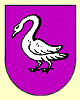
The swan is the ensign of poets and musicians. It symbolizes perfection, beauty, and grace. It also represents light, love, grace, sincerity and perfection. For a bearer of the swan it represents poetic harmony and learning. In Ireland the swan was regarded as the bird that bore the spirit of a dead Celtic chieftain to the next life. |
|
Swepe |
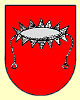
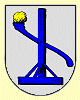
Also known as sling or ballista. Considered a formidable engine of warfare, similar to the catapult. It was an ancient means to hurl missiles against an enemy. It represents a fierce warrior. |
|
Sword |
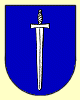
The sword is the emblem of military honor and should incite the bearer to a just and generous pursuit of honor and virtue in warlike deeds. It is also symbolic of liberty and strength. In the Middle Ages, the sword was often used as a symbol of the word of God. The sword (especially borne with flames) is also a symbol of purification. When borne with a cross in the same field, the sword signifies the defense of the Christian faith. |